

Kitchen appliance garage upgrades are now a practical way to get a crisp modern look and a clutter-free countertop—without blowing your remodel budget. Whether you want a seamless pocket door, maximize resale value, or just keep your coffee maker out of sight, here’s how to make smart decisions when you add this in-demand kitchen feature.
Key Takeaways
- Appliance garages with pocket door hardware range from $1,200–$2,500 custom, or $500–$1,000 prefab, plus $500–$1,000 for specialized pocket-door hardware.
- This hidden appliance storage kitchen feature can boost resale by 0.5–1 percent of home value and instantly delivers a clutter-free look.
- Careful planning for electrical, clearance, and ventilation will prevent the most common user complaints—never skip these steps.
- What is a kitchen appliance garage with a pocket door?
- How to add a kitchen appliance garage—with less hassle
- Cost breakdown, pitfalls, and how to avoid user complaints
- Conclusion
- FAQ
What is a kitchen appliance garage with a pocket door?
A kitchen appliance garage is a specialized upper or base cabinet designed to keep countertop appliances (think coffee makers, toasters, blenders, or air fryers) hidden but still easily accessible. The most functional and visually clean approach is the appliance garage with pocket door: here, doors slide back and tuck into the cabinet sides, fully disappearing from view. This is sleeker and more ergonomic than old roll-up/roller doors (tambour), which use horizontal or vertical slats that roll into a cavity above or beside the cabinet.
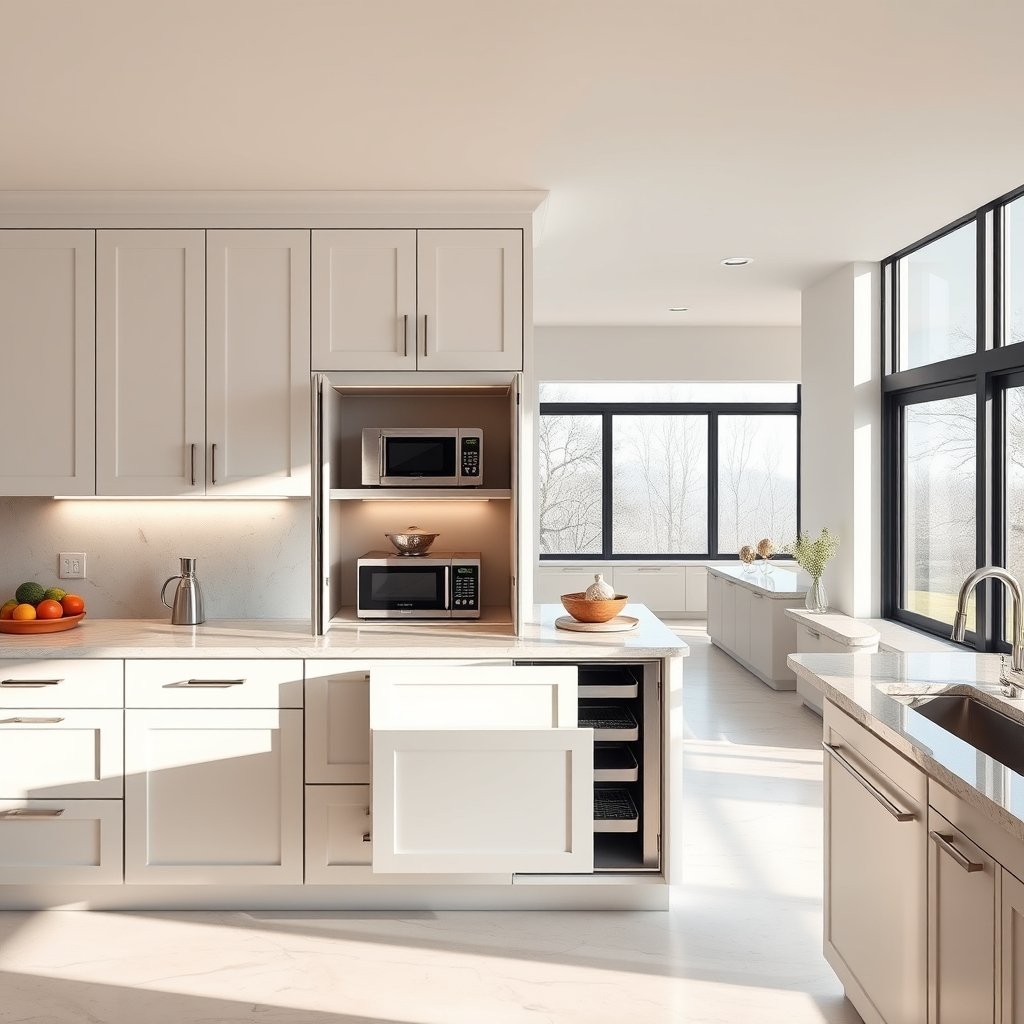
You’ll find these hidden appliance storage kitchen solutions most commonly along the main backsplash run, on kitchen islands, or as part of a “morning station” for coffee and toast. Pocket doors are favored for their space-saving action—no swinging doors to block workflow—and their smooth, high-end look.
2024–2026 cost snapshot: Fully custom cabinets with appliance garages and pocket doors typically run $1,200–$2,500 installed; prefabricated (prefab) units cost about $500–$1,000, plus $500–$1,000 for quality pocket door hardware and trim. [Source]
For more hidden storage strategies, see our scullery kitchen guide and panel ready appliance tips.
How to add a kitchen appliance garage—with less hassle
Ready to make your countertop clutter disappear? Here’s a step-by-step guide to adding a functional, resale-friendly appliance garage with a pocket door:
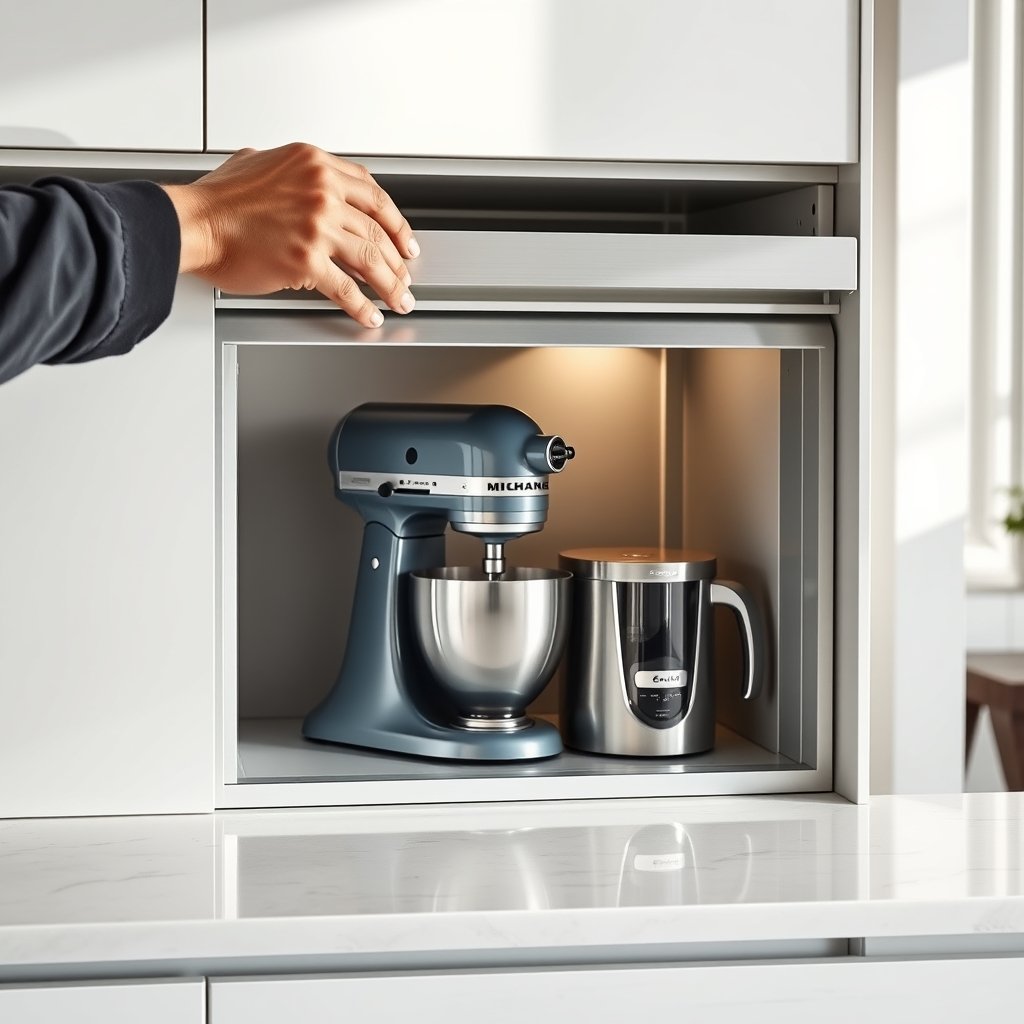
- Inventory appliances: List every small appliance you want out of sight but within reach. Most homeowners underestimate the number and size.
- Choose prefab or custom: If you have standard-size needs or a simple spot (like under a wall cabinet), prefab may save time and dollars. For odd corners, wide units, or special finishes, go custom.
- Decide on location: Common placements are the main backsplash, an island end cap, a corner unit, or a coffee station hidden cabinet. Each site requires slightly different door mechanics—consult your cabinetmaker early.
- Plan electrical and venting: Add GFCI outlets and consider a switched or safety interlock model (see below). For steam-generating devices (coffee, toaster), always allow for airflow or venting to the room.
- Select hardware quality: Go for soft-close tracks and heavy-duty pocket door hardware rated for frequent daily cycles. Ask for warranties of at least 2–3 years on moving parts.
- Final measure and confirm: All your devices should fit with the doors fully open. Check for adequate shelf adjustability and that none of your appliance handles or lids scrape the interior.
Want more on how storage can simplify your space? Read our in-depth Rubbermaid Brilliance containers review.
Cost breakdown, pitfalls, and how to avoid user complaints
Even smart designs have their issues. Here is what real users and pro installers report most often—and what to do about them:
| Option | Pre-Fab | Custom |
|---|---|---|
| Cabinet Unit | $500–$1,000 | $1,200–$2,500 |
| Pocket Door Hardware | $500–$1,000 | $500–$1,000 |
| Electrical & Venting | $200–$500 | $300–$800 |
| Labor & Installation | Often lower | Higher, bespoke |
| Warranty | 1–2 years typical | 2–5 years typical |
Most common pitfalls:
- Sticking or misaligned doors: Often caused by cheaper hardware or bad install. Choose soft-close, high-use tracks and get annual adjustment checks.
- Limited interior clearance: Many garages are too shallow for bulkier appliances—always verify cabinet internal depth/height (allow for cord space too).
- Heat & venting issues: Closed doors trap heat and moisture from toasters, coffee makers, or air fryers. Go for vented cabinets or leave the door open when in use.
- Outlet safety: Powered appliances can be a fire risk if left running behind closed doors. Install interlock outlets that cut power as soon as the door shuts. [Source]
- Electrical complexity or surprises: Running new circuits or GFCI upgrades may add hundreds to the budget—plan electrical early.
Homeowners typically see a 0.5–1 percent resale boost thanks to instant visual appeal, but don’t expect it to dramatically change your home’s market value. Appliance garages largely support a premium look for buyers who want clutter-free kitchens [Source].
See more clever appliance hiding strategies in our Anchor Hocking glass jar review.
Conclusion
Adding a kitchen appliance garage with a pocket door is a proven way to combine function, clean design, and resale-friendly features in any kitchen remodel. By planning carefully—measuring appliances, investing in quality hardware, and addressing electrical and ventilation early—you’ll avoid almost all common pitfalls and overcrowding headaches. If you want a kitchen that impresses buyers and makes your daily routine easier, make sure your contractor includes a kitchen appliance garage in your next quote.
Ready to get started? Measure your small appliances, download our free 1-page spec sheet, and request both prefab and custom cabinet estimates from a trusted local pro. For even more inspiration and expert storage ideas, explore our guides on sculleries and white oak kitchen cabinets.
FAQ
How much does an appliance garage with pocket door really cost in 2024–2026?
A fully custom cabinet is $1,200–$2,500 installed; prefab units run $500–$1,000; and quality pocket-door hardware adds $500–$1,000. Electrical/venting and labor are extra. Budget $2,000–$4,000 all-in for custom with pro install.
Does a kitchen appliance garage actually boost resale value?
Yes, but modestly. Expect a resale value increase of about 0.5–1 percent in most suburban markets, mainly because buyers value a clutter-free, luxury look.
What’s the biggest mistake people make with appliance garages?
Not measuring their actual appliances—including cords and handles—so the garage ends up too small or impractical. Always verify fit before you order.
Are roll-up doors or pocket doors better?
Pocket doors are preferred for seamless design and unobstructed access. Roll-up doors (tambour) are easier to retrofit in small spaces but less robust and can look dated.
What new features are worth adding for 2026 and beyond?
Look for integrated safety interlock outlets, motion-activated lighting, sensor-controlled venting, adjustable shelves, and convertible island garages—these add both safety and flexibility.