

Induction cooktop 2026 models represent a true leap forward in kitchen efficiency, safety, and cost savings, especially for homeowners looking to replace gas or conventional electric cooktops. If you value smarter energy use, cleaner air, and future-ready tech, these next-generation cooktops are about to change how you cook, save, and adapt your kitchen.
Key Takeaways
- Induction cooktop 2026 models deliver 85–90% thermal efficiency and 30–40% lower energy loss compared to gas — cutting environmental impact and utility bills.
- Top advances: AI-driven power smoothing, full surface cook zones, and deep smart-home integration now standard in premium and midrange options.
- Successful retrofits demand a dedicated 40–50 amp, 240 V circuit and precise install planning — portable induction cooktops sidestep most electrical hurdles for renters or secondary spaces.
- Why 2026 matters — what’s changed in induction technology
- Induction cooktop vs gas vs electric — energy, safety, and cost comparison
- Top 3 breakthrough features many reviews miss
- Common installation challenges and electrical requirements
- Full-surface vs fixed-zone vs portable — which is right for your kitchen
- The most common user complaints and how to avoid them
- Buying guide — selecting the best induction cooktop for home (features checklist)
- Cost, energy savings and realistic ROI expectations
- Installation checklist and questions to ask your electrician/installer
- Maintenance, troubleshooting and warranty tips
- Quick decision flow and final recommended next steps
- FAQ
Why 2026 matters — what’s changed in induction technology
The new wave of induction cooktop 2026 models are packed with tangible advances that matter for both new construction and kitchen retrofits. Here’s why:
- Thermal efficiency leaps ahead: “Induction cooktops released in 2026 achieve roughly 85–90% thermal efficiency—about 10–15% higher than conventional electric smooth top models and up to three times the efficiency of gas ranges.”
- Smarter power management: Adaptive AI algorithms fine-tune preheating, deliver consistent simmering, and optimize overall energy draw, minimizing spikes and keeping electricity bills in check.
- Full-surface (free-zone) technology: No more guessing which coil to use — cook anywhere on the glass to truly maximize usable area, reducing crowding and pan-juggling.
- Smart-home ecosystems: Out-of-the-box WiFi, real-time energy use dashboards, voice controls, app monitoring, and even remote diagnostics — all help you save even more, spot issues before they become expensive, and slot your cooktop into modern home setups.
- Lifetime indoor air quality improvement: With no combustive emissions or heat loss into the room, induction units are the clear winner for air safety and reduced cooling costs in summer.
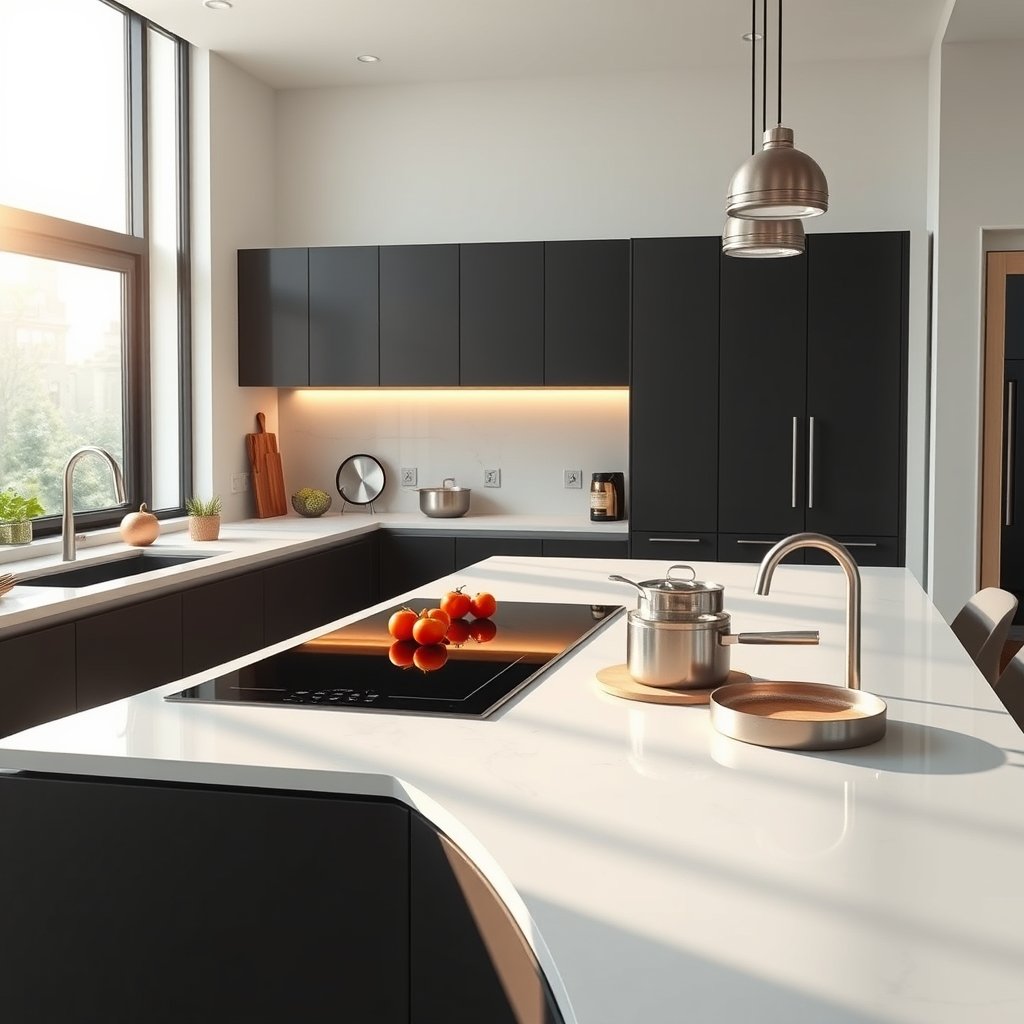
Induction cooktop vs gas vs electric — energy, safety, and cost comparison
Here is what you need to know when weighing induction cooktop 2026 options against traditional gas and electric models:
- Energy Use: Induction directly heats the pan, reducing heating-related energy loss by 30–40% versus typical gas or electric coil models.
- Operating Costs: Lower energy loss translates into noticeably lower utility bills despite higher upfront costs. For frequent cooks or large households, the payback can be two to four years depending on local rates.
- Safety: With no open flames and a glass surface that remains cool except directly under a pan, risk of accidental burns is dramatically reduced. Units shut off instantly if no pan is detected.
- Indoor Air: No combustion means no carbon monoxide or benzene emissions. Most gas ranges require range-hoods, but modern induction often eliminates this requirement.
- Installation Costs: Higher for built-in induction, primarily due to electrical upgrades, but minimal for portable units.
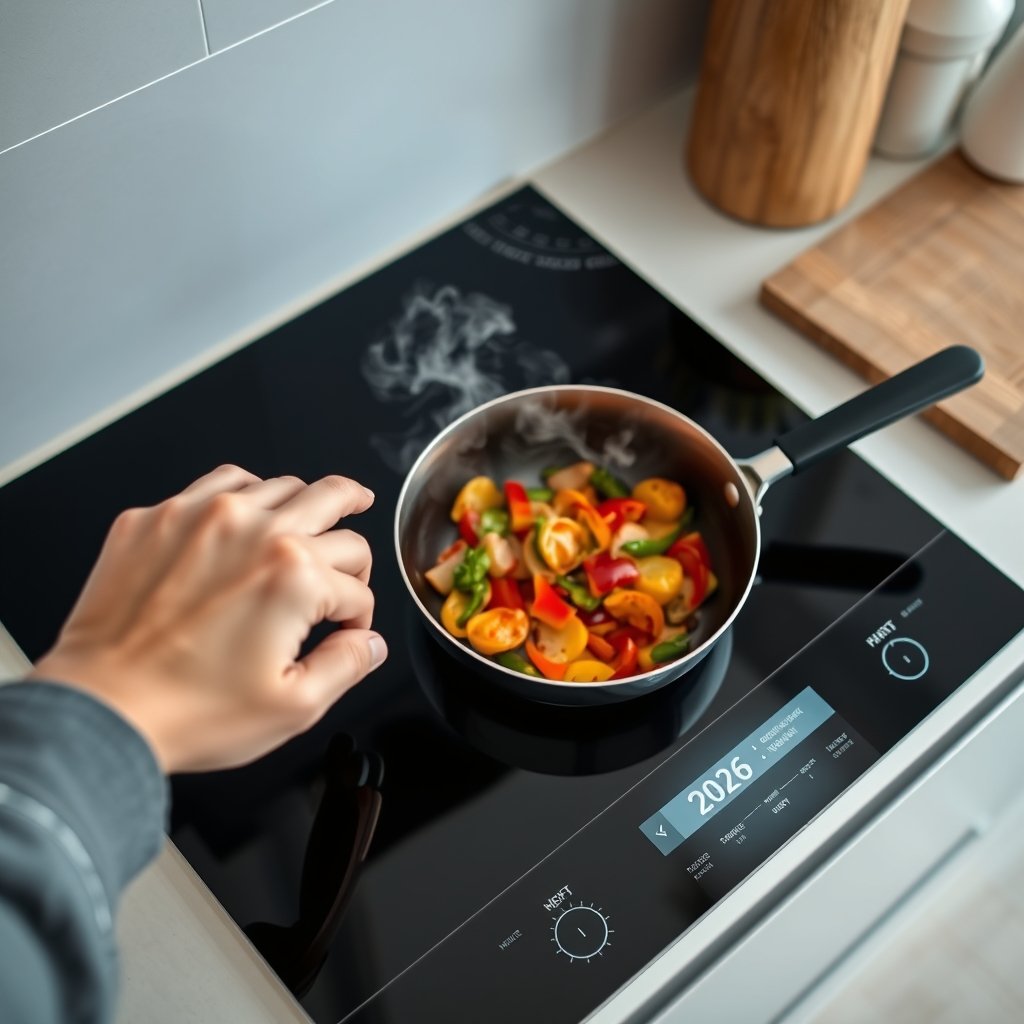
| Cooktop Type | Thermal Efficiency | Indoor Air Impact | Safety Features | Installation Needs |
|---|---|---|---|---|
| Induction cooktop 2026 | 85–90% | No pollutants | Cool touch, auto shutoff | 40–50A circuit (built-in) or 120V/high amp (portable) |
| Gas range | 30–35% | CO, NOx, Benzene | Open flame risk | Gas supply, vent hood |
| Electric smooth-top | 70–80% | No pollutants | Hot surface risk | Dedicated 240V, less amperage |
Top 3 breakthrough features many reviews miss
The best induction cooktop for home in 2026 is more than just a fast glass top—these three innovations are game-changers:
AI-Driven Adaptive Power Management:
Modern induction cooktops use AI to learn your habits. They pre-heat common zones, adjust output to reduce spikes, and distribute energy more efficiently during heavy meal preps.
“2026 models now embed AI‑driven adaptive power management that learns a user’s cooking patterns to pre‑heat zones and minimize power spikes…”
True Full-Surface Free-Zone Technology:
Forget rigid burner rings. Now, any point on the glass can act as a heating element, letting you use oversized pans or awkward-shaped cookware without losing cooking efficiency or burning gaps.
“They offer true full‑surface ‘free‑zone’ technology that lets any point on the glass act as a burner—expanding usable cooking area beyond the fixed coil layout.”
Deep Smart-Home Integration:
2026 units now pair natively with Amazon Alexa, Google Home, and Apple HomeKit. Features include live energy dashboards, voice controls, child lock override, recipe guidance, and hassle-free, remote troubleshooting.
“Providing real‑time energy‑use dashboards, voice‑activated controls, and remote diagnostics that improve the user experience and further reduce operating costs.”
Want a deep breakdown of flexible kitchen storage to match your new cooking setup? Check our review of the Rubbermaid Brilliance containers for safer, smarter food storage options.
Common installation challenges and electrical requirements
Converting from gas or old electric? Induction cooktop installation almost always means reconsidering your electrical infrastructure:
- Dedicated circuit (40–50A, 240V) required: Most full-size models pull heavy current. Portable induction cooktops can run on dedicated 120V outlets but may not deliver full multi-zone power.
- Panel capacity check: Verify with your electrician that your panel can handle the new load. If not, a sub-panel or service upgrade may be needed.
- Precise cut-out for full-surface: Full-surface and “flex-zone” models need exact counter dimensions and weight support — check manufacturer’s spec sheet before you buy.
- Ventilation planning: While induction generates less ambient heat, downdraft options or venting can be critical for kitchens with limited airflow or for users replacing a vented gas range. Consider a model with an integrated induction range with downdraft function if needed.
- For renters/portable installs: Portable induction cooktops are plug-and-play on high-capacity 120V lines, require minimal counter cut-out, and offer timer-based auto shutoff for safety.
Installer checklist:
- Confirm circuit amperage and 240V (or 120V for single-zone portables) availability at location.
- Measure and re-measure cut-out space; allow room for venting underneath.
- Check weight support — most full surface induction cooktops can be heavier than legacy models.
- If unsure, hire a licensed electrician. Even one missed wiring step can void the warranty or pose safety risks.
Want a full install cost breakdown? Explore our guide to kitchen retrofits and appliance installation for price comparisons and budgeting tips.
Full-surface vs fixed-zone vs portable — which is right for your kitchen
How do you pick between the latest full surface induction cooktop, a classic fixed-zone design, or a portable induction cooktop? Match your scenario below:
- Full-surface (free-zone):
- Best fit for: Large families, frequent entertainers, cooks who use oversized pans or gourmet accessories.
- Pros: Any part of the glass can heat, allowing overlapping pots and flexible pan placement. Fewer meal-delaying bottlenecks.
- Cons: Costlier than fixed-zone, demands highly precise install, higher electrical draw.
- “Full-surface ‘free‑zone’ technology lets any point on the glass act as a burner—expanding usable cooking area beyond the fixed coil layout.”
- Fixed-zone:
- Best fit for: Average family cook, users with predictable meal routines and modest space.
- Pros: Lower cost, quick installation, fewer interface quirks.
- Cons: Zone crowding with large cookware, less flexibility.
- Portable induction cooktop:
- Best fit for: Renters, dorms, RVs, or as a value-add auxiliary cooktop for holidays or parties.
- Pros: Requires only high-capacity 120V outlet, easily stored, up to 1800W output with safety timers and auto-shutoff.
- Cons: Limited to one or two zones, overall power lower than built-ins, weight restrictions (typically under 30 lbs of pan).
Don’t forget: “Typical portable spec context is a high‑capacity 120‑V line and features like up to 1800 W, auto‑shutoff.” Refer to our portable cooktop round-up for specs and buying advice.
Small kitchen? For ultimate food storage flexibility, check out the best ways to keep your space organized alongside your new cooktop upgrade.
The most common user complaints and how to avoid them
Even the best induction cooktop for home isn’t 100% perfect out of the box. Common complaints and fixes include:
- Audible humming or buzzing: Most noticeable at lower heat with cheap, thin, or warped pans. Buy heavier base cookware and check for sound-damping features in your model.
- Confusing or limited zone layout: If multiple large pans crowd the cooktop, some zones may overlap or shut down. Choose full surface induction cooktop models for the best flexibility, and always check maximum pan size before buying.
- Glass weight limits: Every model sets a cap for combined pot weight (usually 25–35 pounds). Don’t pile on huge Dutch ovens with multiple pans.
- Overly aggressive auto-shutoff on portables: Portable induction cooktop units often include safety timers. If you need longer cooking windows, select a model with programmable or extended shutoff settings.
- Cookware compatibility: Induction only works with ferrous (magnetic) pans. Stainless steel, cast iron, and some enameled ware are best. If you want to keep your current set, check each piece or revisit our earlier ‘hacks’ tip for induction interface disks.
For a balanced look at tradeoffs, see Consumer Reports’ induction cooktop pros cons analysis or read our clear listed rundown.
Buying guide — selecting the best induction cooktop for home (features checklist)
Here’s a simple purchasing framework for selecting the top induction cooktop 2026 for your needs:
- Intended use: Everyday family cooking vs. precision/serious cooking vs. small-space use.
- Power per zone: Choose a cooktop with high total kW (up to 4.5 kW per zone for serious cooks) for searing or boiling large pots. For portables, max is often 1800W per burner.
- Zones vs. free-zone: More is not always better. Four to five zones is plenty unless large group cooking is routine—otherwise opt for full-surface (free-zone) models for the flexibility.
- Ventilation: Ventless kitchens or island installs should prioritize induction range with downdraft options.
- AI and smart features: Seek models with learning power management, usage logs, or smart integrations if you’re already smart-home enabled.
- Warranty & service: At least two years is standard; up to five on premium brands. Confirm remote diagnosis is built-in for online troubleshooting.
- Cookware compatibility: Buy or test a magnet before purchase. Need help? See our guide to modern kitchen essentials for organization and cookware tips.
Efficiency, savings, and ventilation: “Induction cooktops…85–90% thermal efficiency… translating into 30–40% lower heating‑related energy loss,” and recommend built-ins with downdraft where outside venting is limited.
Cost, energy savings and realistic ROI expectations
Yes, induction cooktop 2026 models cost more up front — but here’s how the math works out over the real world:
Upfront costs: Most 30–36-inch built-in models run $1,200–$2,800 plus $500–$1,200 for install and electrical upgrades. Portables are $80–$400 each.
Operating cost savings: With “85–90% thermal efficiency” and “30–40% lower heating‑related energy loss,” annual power bills are typically cut by $80–$180 (for average-volume cooks) compared to electric; up to $300 savings vs. heavy gas use.
Payback window: Many users see ROI in 2–6 years, especially where natural gas rates are high or where users cook daily with large pots.
Smart energy dashboards: Self-monitoring can reduce “phantom” standby draw and help you spot waste or overuse patterns — driving further savings.
“Noticeably lower utility bills despite higher upfront costs” is the new normal. Get the latest model and use it right, and you win over time.
Installation checklist and questions to ask your electrician/installer
Don’t fly blind! Use this install checklist, especially for kitchen remodels and replacements:
- Do I have a dedicated 40–50 amp, 240 V circuit at stove location?
- Does my panel have enough spare capacity for a cooktop’s peak-load demand?
- Are cut-out dimensions correct for the make and model (measure twice, cut once)?
- Is my kitchen air flow adequate, or will I need a downdraft model?
- Can my counter/island structurally support the combined weight of the unit and multiple pans?
- Do I need permits or code inspections for changes?
Critical questions for the installer:
- Will my current breaker box support the new unit, or is a sub-panel needed?
- Is the wiring rated for sustained high amperage use?
- Can cut-outs be adjusted/reinforced for a full-surface model?
- Is there surge protection on the circuit?
- Does the install void or maintain factory warranty?
Need a food storage overhaul after rewiring? Our vacuum sealer review breaks down prep and organization tips for induction adopters.
Maintenance, troubleshooting and warranty tips
Induction cooktops are famously easy to keep clean, but here’s how to avoid pitfalls:
- Routine cleaning: Wipe with a damp cloth once cool. Use only mild detergents — never abrasive cleaners or scouring pads. For full Glass care, see our pantry glass review here.
- Portable induction cooktop care: For portables, clean after every use, and don’t store with pans on top. Timers (auto shutoff) help prevent forgotten-on units; some models are aggressive, so check before buying.
- Noisy operation: Humming or buzzing is common, especially at low settings. Heavier, flat magnetic cookware and some sound-damping feet help reduce noise.
- False auto shutoff: Units may turn off if the pan is too small or if vibration is detected (common with lightweight pans).
- Warranty/service: Most units cover 2–5 years, with remote diagnostics now often included. Keep serial numbers and installation paperwork for easier service support.
Maintenance note: Beware of cookware with warped or non-magnetic bases as these trigger most “not detected” or auto shutoff issues. For details on pros and cons, our BPA-free storage review highlights compatible materials.
Quick decision flow and final recommended next steps
Replacing gas? Plan for larger upfront install cost but rapid air quality and safety improvements.
Renting or can’t upgrade wiring? Go with a portable induction cooktop for flexibility; plug into any dedicated high-capacity 120V outlet.
Smart-home or app fans? Choose a model with deep integration for voice, app, and over-the-air service updates.
Ventilation constrained? Look for induction range with downdraft for ventless operation.
Immediate next steps:
- Measure your panel and check capacity.
- Shortlist 3 models based on your real-world scenario (see checklists above).
- Get a few quotes from local licensed electricians (ask all checklist questions).
- Test cookware with a magnet, or plan for swap-out if needed.
Remember: “2026 induction models achieve roughly 85–90% thermal efficiency…leading to 30–40% lower heating‑related energy loss.” The sooner you plan, the quicker you’ll cook smarter and safer.
FAQ
Do induction cooktop 2026 models work with all cookware?
No, only cookware with a magnetic (ferrous) base is compatible. Test with a simple magnet — if it sticks, you’re good. Many modern sets are now induction-ready, or use an induction interface disk for special pans.
What electrical upgrades are usually needed for installation?
Most built-in induction cooktops require a dedicated 40–50 amp, 240 V circuit, and panel capacity to match. Portable units can work with a high-amp 120 V line, but may offer less power per burner.
Are induction cooktops really “safer” than gas or classic electric?
Yes. The surface stays cool without a compatible pan, automatically shuts off if no pan is detected, and there’s no open flame or hazardous emissions.
How does full surface induction cooktop technology improve everyday cooking?
It lets you place any size pan anywhere on the glass, eliminating “dead zones” and allowing flexible, multi-pot arrangements. It’s especially helpful for large family meals or when using oversized cookware.
What are common complaints about induction cooktops and how do I avoid them?
Common issues include humming noises (buy thicker induction pans), aggressive auto-shutoff timers (choose programmable models), and zone crowding (opt for full-surface models if you use many large pans).